






Breaking into Cybersecurity: A Complete Roadmap for Beginners
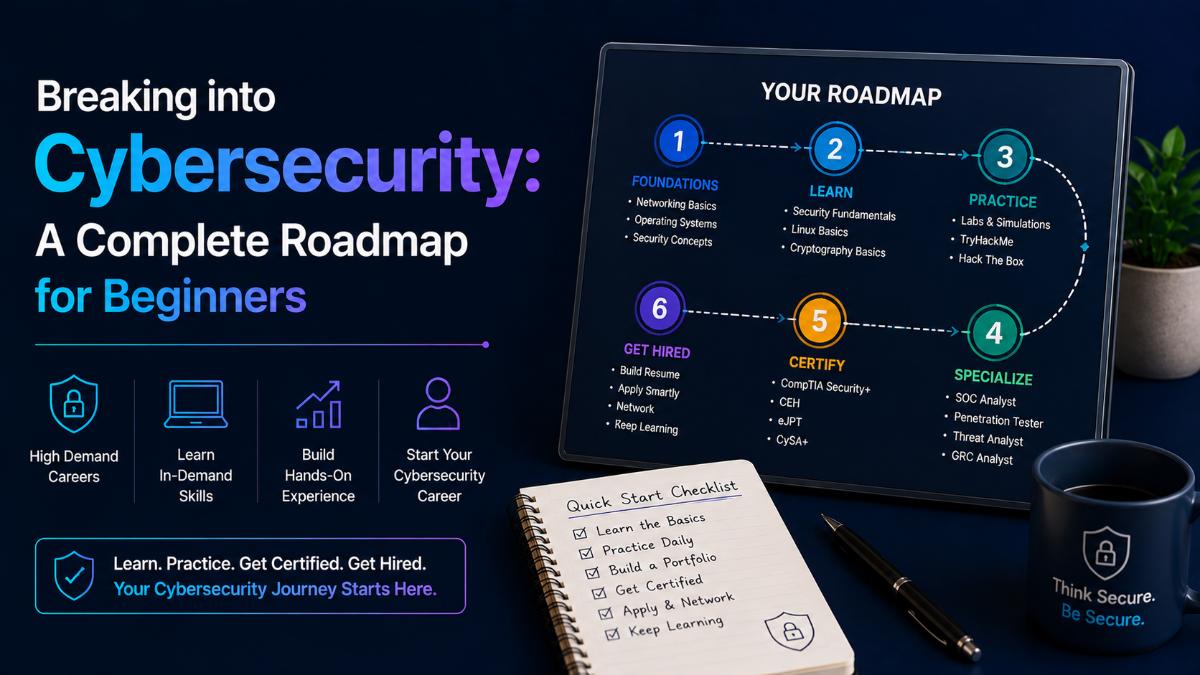
The Cybersecurity Demand
As organizations migrate their operations online, cyber threats and data breaches have increased exponentially. Consequently, cybersecurity has become one of the fastest-growing sectors in the technology industry, with a massive shortage of qualified professionals. If you want to build a career in security, you will find diverse paths: **Red Teaming** (penetration testing/offensive security), **Blue Teaming** (defense/security monitoring), and **Grc** (governance, risk, and compliance). However, breaking into this field requires a structured learning path.
This comprehensive roadmap details the foundational skills, practice labs, certifications, and entry-level roles you need to navigate to launch your career.
Step 1: Build Foundational IT Skills
You cannot secure a system if you do not understand how it works. Before learning security tools, master these three foundations:
- Networking Basics: Understand IP addressing, routing protocols, subnets, the OSI Model, and common ports/protocols (like HTTP, SSH, DNS, and FTP).
- Operating Systems: Learn how to administer both Windows Server and Linux. Get comfortable using the Linux Command Line (Terminal).
- Basic Scripting: Learn Python or Bash scripting. Security professionals use scripts to automate threat checks and analyze log files.
Step 2: Learn via Hands-on Practice Labs (Free)
Theory is not enough; you must build practical skills. Use these platforms to practice in safe sandbox environments:
- TryHackMe: Highly recommended for absolute beginners. It offers gamified, guided learning paths covering cybersecurity concepts, tools, and basic exploitation.
- Hack The Box (HTB): A more advanced platform offering complex virtual machines to practice penetration testing and network hacking.
- PortSwigger Web Security Academy: The ultimate free resource to learn web application security (SQL Injection, XSS, CSRF).
Step 3: Earn Entry-Level Certifications
To get your resume noticed by HR, earn a respected baseline certification:
- CompTIA Security+: The most widely accepted entry-level cybersecurity certification globally, covering threats, attacks, and security controls.
- Google Cybersecurity Certificate: A beginner-friendly online training program that teaches Python, SQL, and security concepts.
- eJPT (Junior Penetration Tester): A practical, hands-on certification testing your ability to perform basic network hacking tasks.
Step 4: Target Entry-Level Roles
Do not expect to become a Senior Penetration Tester on day one. Target these entry-level roles:
- SOC Analyst (Tier 1): Monitor security dashboards, investigate alerts, and escalate threats. This is the most common entry gate.
- System Administrator: Managing IT infrastructure is a great stepping stone that transitions naturally into security roles.
Written by JobPortal Editorial Team
Senior Career Advisor & Recruitment Specialist at JobPortalConnect. With years of experience in HR matching, they review resumes, optimize career pathways, and interview recruiting partners directly.