






How to Manage Job Search Anxiety and Avoid Burnout
The Hidden Toll of Job Hunting
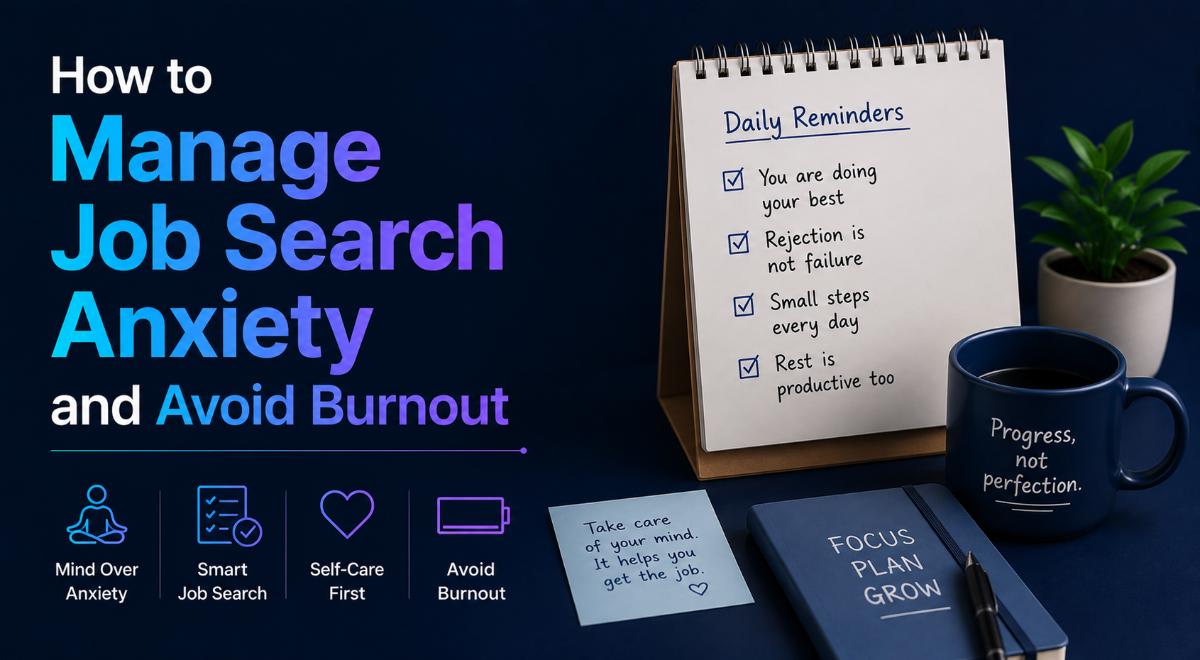
When we talk about the job search process, we focus almost entirely on resumes, technical preparation, and interview tips. However, we rarely discuss the emotional toll of job hunting. The constant cycle of sending applications, waiting for feedback, handling rejections, or dealing with ghosting from recruiters can cause severe anxiety and mental exhaustion. Over time, this stress leads to burnout, making it difficult to perform well during actual interviews.
If you are feeling overwhelmed, remember that job search anxiety is normal, but it must be managed. This guide offers practical, actionable strategies to protect your mental well-being and maintain confidence during your search.
1. Limit Your Daily Search Hours
One of the primary causes of job search burnout is treating the search as a 24/7 task. Constantly refreshing job boards, LinkedIn feeds, and emails keeps your nervous system in a state of high alert.
- Set a schedule: Define strict hours for your job search (e.g., 9 AM to 1 PM, Monday to Friday). Outside of these hours, close your laptop and do not check job boards or emails.
- Focus on quality over quantity: Instead of applying to 50 jobs a day with generic clicks, select 3 to 5 matching roles, customize your resume for each, and write a personalized cover letter. This increases your response rate while reducing application fatigue.
2. Reframing Rejection and Ghosting
It is easy to take rejections personally, viewing them as a reflection of your worth or capabilities. However, hiring decisions are influenced by dozens of factors beyond your control: internal candidate promotions, budget cuts, changing project requirements, or simple recruiter mismatch.
A healthier mindset:
- Treat interviews as practice runs. Every interview you complete improves your communication skills and makes you sharper for the next one.
- If a company ghosts you, recognize that it reflects their disorganized hiring processes, not your qualifications. Move on immediately and keep your pipeline active.
3. Create a Daily Routine
Unemployment or long job breaks can disrupt your daily structure, which increases anxiety. Maintain a balanced daily routine:
- Set a regular wake-up time and sleep schedule.
- Dedicate 1 hour daily to physical activity (walking, running, yoga, or gym). Exercise reduces cortisol (stress hormone) levels significantly.
- Spend time on personal interests or coding projects that have nothing to do with job applications. Building something purely for fun restores your passion for your work.
4. Build a Support Network
Do not go through the job search alone. Talk to friends, family members, or fellow job seekers about your experiences. Join online developer or professional communities where you can share tips, discuss challenges, and realize that hundreds of talented professionals are experiencing the same journey. Sharing the burden makes it far easier to manage.
Written by JobPortal Editorial Team
Senior Career Advisor & Recruitment Specialist at JobPortalConnect. With years of experience in HR matching, they review resumes, optimize career pathways, and interview recruiting partners directly.