





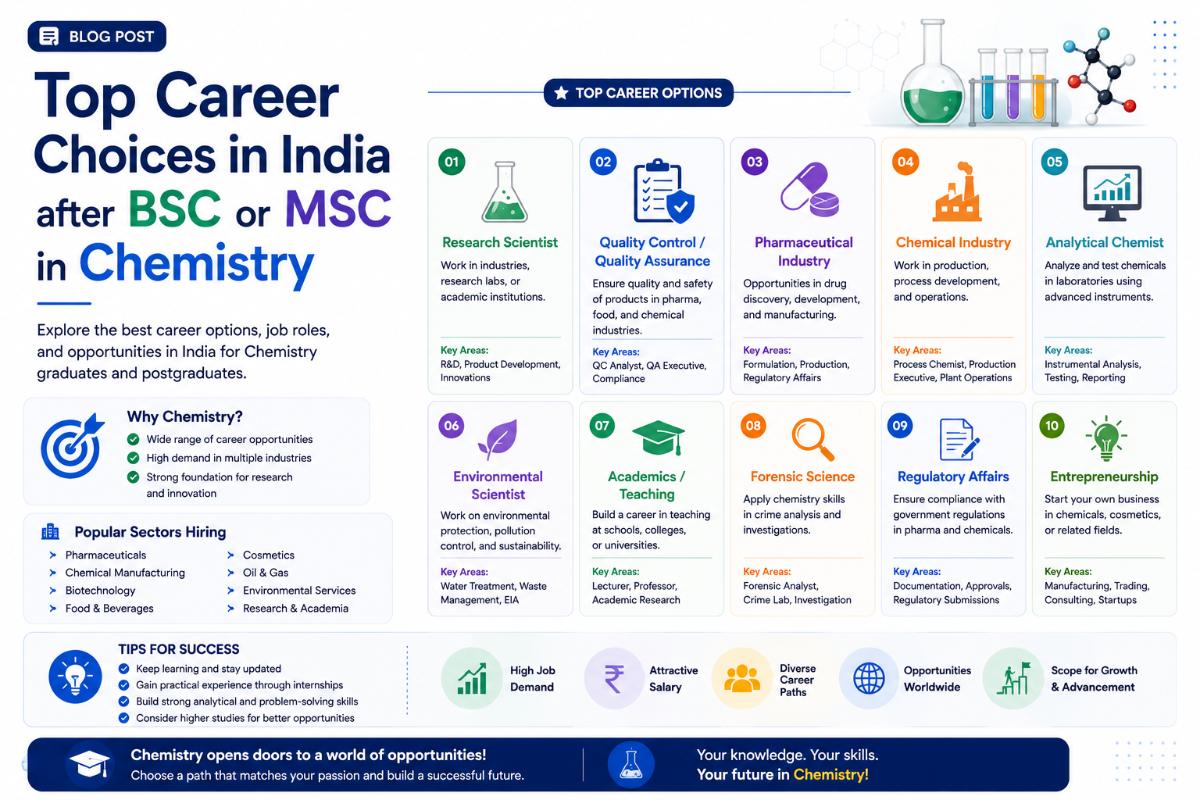
Top Career Choices in India after BSC or MSC in Chemistry
The Chemistry Boom in Indian Industries
India is one of the global hubs for chemical manufacturing, generic drug formulation, and agrochemical production. Consequently, graduates with a B.Sc. or M.Sc. in Chemistry are in high demand. However, many students are unaware of the career pathways available to them beyond teaching or academic research. This article covers the top job roles and industries where chemistry graduates can build lucrative careers in India.
1. Pharmaceuticals & Drug Formulation
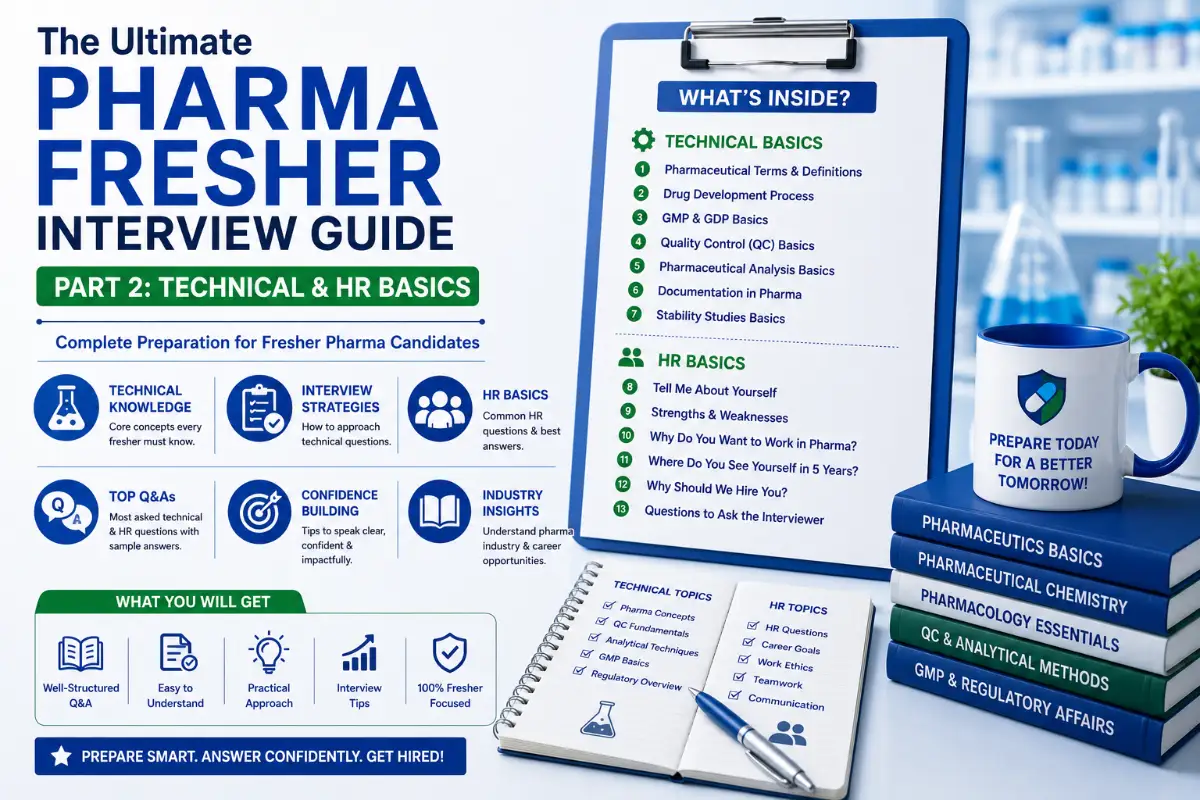
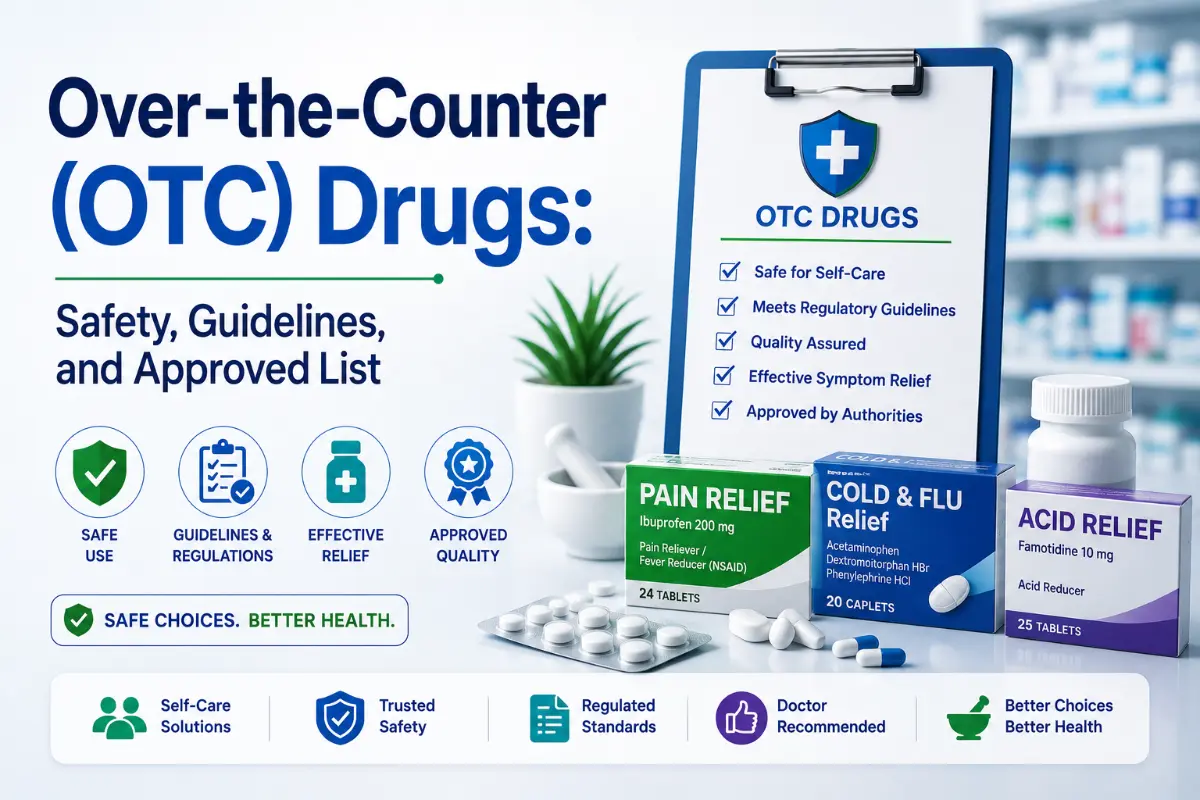
The pharmaceutical industry is the largest employer of chemists in India. Major pharma clusters in Hyderabad, Ahmedabad, Mumbai, and Bangalore constantly hire chemists for:
- Research & Development (R&D): Synthesizing new drug molecules, analyzing chemical structures, and optimizing processes. (M.Sc. / Ph.D. preferred).
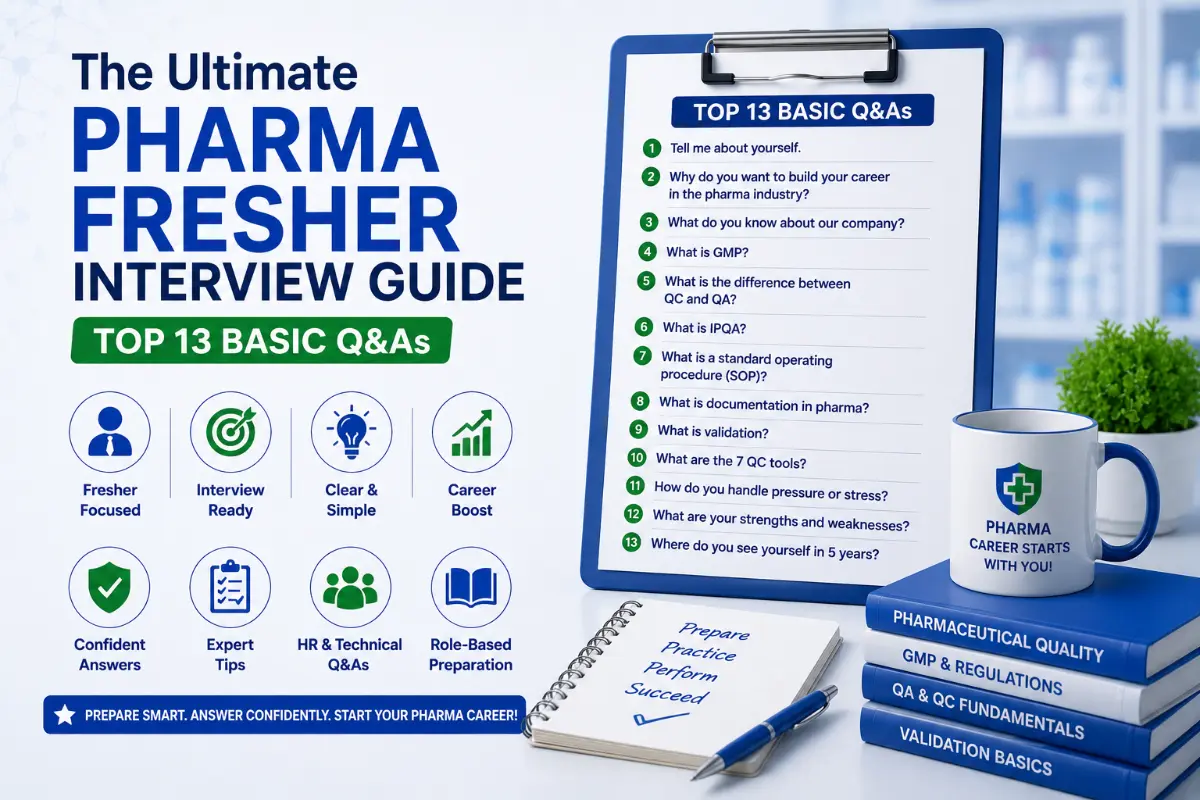
- Quality Control (QC): Testing raw materials, intermediates, and finished pharmaceutical products to ensure they meet strict standards using instruments like HPLC and GC.
- Quality Assurance (QA): Ensuring compliance with GMP regulations, maintaining documentation, and auditing lab processes.
2. Chemical & Agrochemical Manufacturing
India's agrochemical sector is growing rapidly. Chemistry graduates work as process chemists, safety officers, and production supervisors, overseeing the formulation of pesticides, fertilizers, polymers, and specialty chemicals.
3. Analytical & Testing Labs
Testing laboratories (commercial, environmental, and forensic) hire analytical chemists to test water quality, soil content, food purity, and forensic samples. Proficiency in analytical software and laboratory safety protocols is highly valued.
4. Clinical Research Organizations (CROs)
CROs collaborate with global pharma companies to conduct clinical trials. Chemistry majors work in synthesis, clinical data management, and scientific writing, acting as translators of complex molecular studies.
Recommended Skills to Build
To improve your employability in these competitive sectors, focus on:
- Hands-on training with analytical instruments (HPLC, GC-MS, UV-Visible Spectrophotometer).
- Familiarity with laboratory safety protocols and ISO standards.
- Strong documentation and written English skills (crucial for QA/QC and regulatory roles).
- Specialized software packages (like ChemDraw or lab LIMS systems).
Written by JobPortal Editorial Team
Senior Career Advisor & Recruitment Specialist at JobPortalConnect. With years of experience in HR matching, they review resumes, optimize career pathways, and interview recruiting partners directly.