




Work from Home vs. Work from Office: Choosing the Right Setup
The Great Workplace Debate
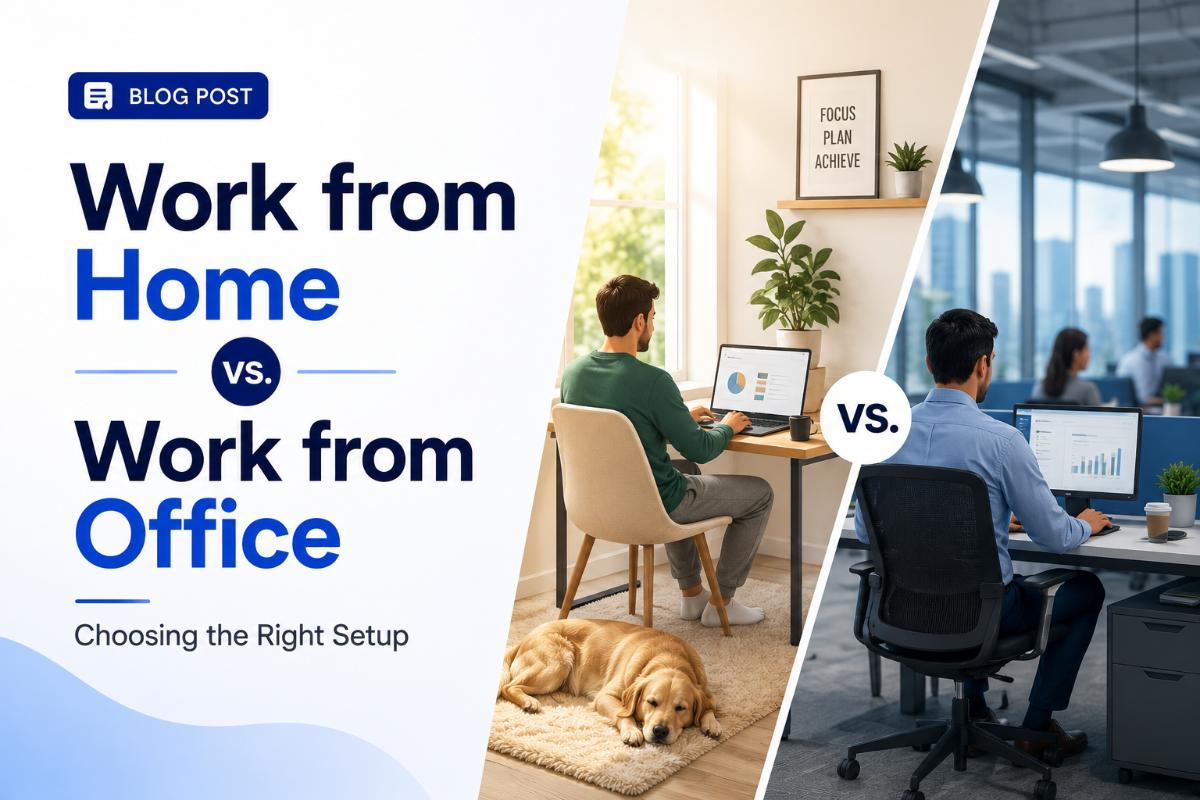
The debate between working from home (WFH) and working from the office (WFO) is ongoing. While WFH offers flexibility and eliminates commutes, WFO provides face-to-face mentorship and structures your day. Both setups have significant impacts on your daily productivity, mental health, and career growth. Choosing the right environment depends on your work habits, personality, and career stage.
1. Team Collaboration and Mentorship
For freshers and junior developers, working from the office provides organic learning opportunities:
- You can ask questions to senior colleagues sitting next to you.
- You learn through observation and listening to technical discussions.
- Building personal relationships with peers is easier face-to-face.
In remote setups, scheduling calls for every minor question can slow down your onboarding.
2. Productivity and Focus Time
- Work from Home: Allows for quiet focus time, free from office interruptions, especially for tasks like writing code or drafting copy.
- Work from Office: Provides structured routines. The clear boundary between "office" and "home" helps prevent burnout.
3. Career Visibility
WFO offers physical visibility. Management notices your presence, work ethic, and leadership contributions organically, which can influence promotion decisions. Remote workers must be proactive to maintain visibility by sharing regular status updates, participating actively in video calls, and documenting achievements.
Written by JobPortal Editorial Team
Senior Career Advisor & Recruitment Specialist at JobPortalConnect. With years of experience in HR matching, they review resumes, optimize career pathways, and interview recruiting partners directly.