





The 4 Critical Types of Validation in Pharmaceutical Manufacturing
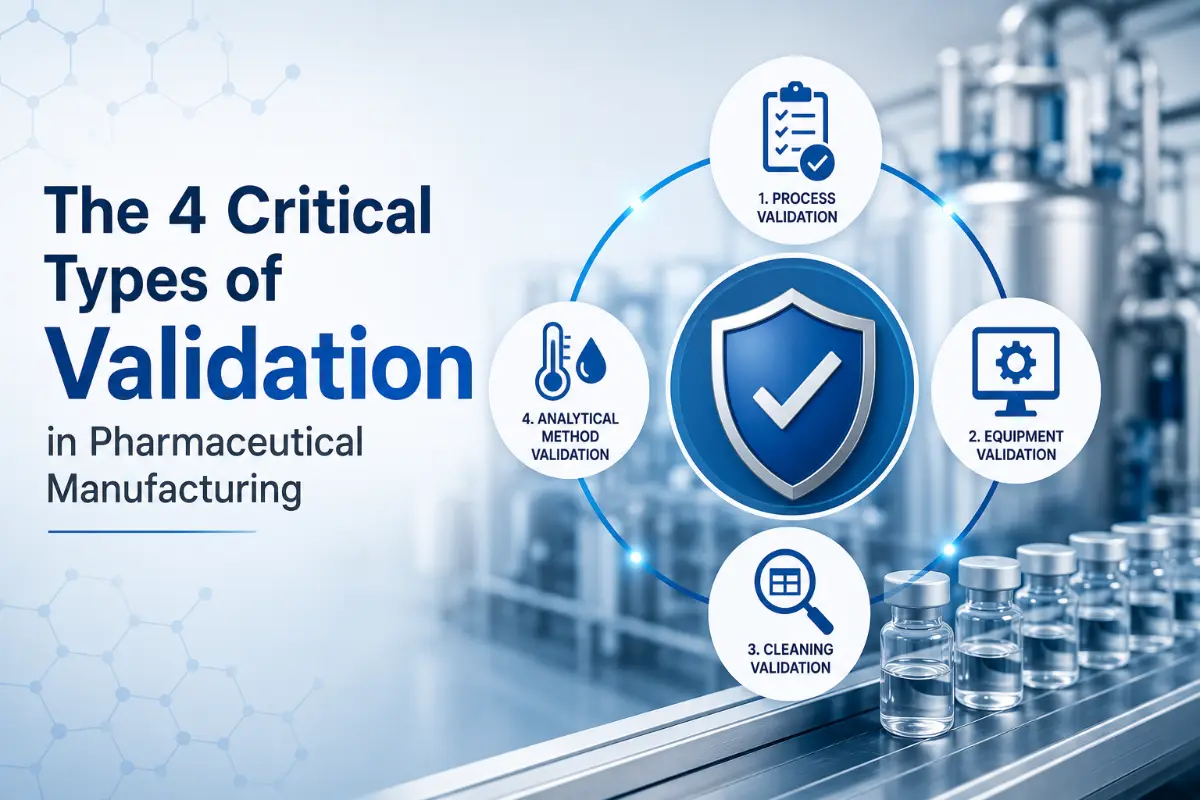
In pharmaceutical manufacturing, quality doesn't happen by chance. It is systematically built, verified, and maintained through strict engineering and science-based systems. The core mechanism global regulators use to verify that a manufacturing process is capable of consistently delivering safe and effective drugs is Validation. Let's explore the 4 essential types of validation every pharmaceutical professional should know.
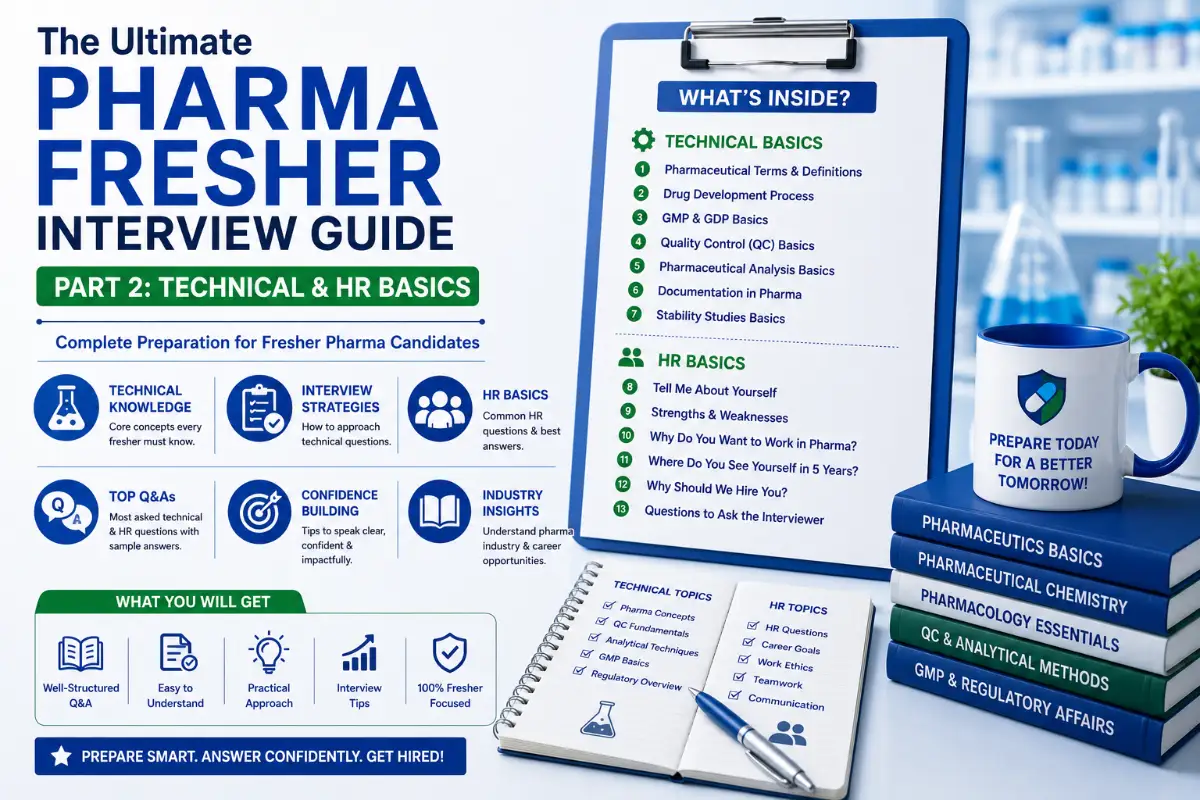
Guide Sections
- ⚙️ 1. Process Validation
- 🧼 2. Cleaning Validation
- 🧪 3. Analytical Method Validation
- 💻 4. Computer System Validation (CSV)
⚙️ 1. Process Validation: The Manufacturing Blueprint
What is it? Process Validation is the collection and evaluation of data, from the process design stage through commercial production, which establishes scientific evidence that a manufacturing process is capable of consistently delivering quality products.
Modern process validation is divided into three distinct stages:
- Stage 1 - Process Design: Defining the commercial manufacturing process based on knowledge gained during development and scale-up activities.
- Stage 2 - Process Qualification (PPQ): Evaluating the process design to determine if it is capable of reproducible commercial manufacturing. This is where the classic "three validation batches" are typically executed.
- Stage 3 - Continued Process Verification (CPV): Ongoing assurance during routine production that the process remains in a state of control.
Key Focus: Confirming that operating parameters (like mixing time, blending speed, and compression force) consistently yield product that meets chemical, physical, and biological specifications.
🧼 2. Cleaning Validation: Preventing Cross-Contamination
What is it? Cleaning Validation is the documented evidence that an approved cleaning procedure consistently and effectively removes active pharmaceutical ingredients (APIs), excipients, cleaning agents, and microbiological contaminants from the equipment surfaces to below pre-established safe limits.
How it works: After manufacturing a batch, the equipment is cleaned. Validation teams collect samples using swab testing (physically rubbing a flat surface area) or rinse testing (analyzing the final rinse water). These samples are analyzed in the QC lab to verify residues are within the Maximum Allowable Carryover (MACO) limit.
Key Focus: Protecting patient safety by ensuring that no residue from a previous product is carried over into the next product batch run on the same line.
🧪 3. Analytical Method Validation: Accuracy in Testing
What is it? Analytical Method Validation is the process of demonstrating that laboratory test procedures (like HPLC methods for assay or impurity testing) are suitable for their intended purpose and produce accurate, reliable, and reproducible results.
Under ICH Q2(R1) guidelines, validation parameters evaluated include:
- Accuracy: The closeness of agreement between the accepted true value and the value found.
- Precision: The degree of agreement among individual test results when the procedure is applied repeatedly to multiple samplings (includes repeatability and intermediate precision).
- Specificity: The ability to assess unequivocally the analyte in the presence of components that may be expected to be present (impurities, degradants, matrix).
- Limit of Detection (LOD) & Limit of Quantitation (LOQ): The lowest amount of analyte in a sample that can be detected or quantitatively determined.
- Linearity & Range: The ability to obtain test results directly proportional to the concentration of analyte in the sample.
Key Focus: Ensuring that laboratory measurements are scientifically sound so that decisions to approve or reject raw materials or batches are based on true data.
💻 4. Computer System Validation (CSV): Data Integrity
What is it? Computer System Validation (CSV) is the documented process that ensures software, automated equipment, and computerized systems operate in a secure, reliable, and consistent manner, fully complying with regulatory guidelines (such as FDA 21 CFR Part 11 and EU Annex 11).
Systems requiring CSV include:
- Laboratory Information Management Systems (LIMS)
- Enterprise Resource Planning (ERP) systems like SAP
- SCADA, PLC controls on manufacturing machinery
- Document Management Systems (DMS)
Key Focus: Confirming that computerized systems have secure audit trails, restricted user access, secure electronic signatures, and fail-safe data storage to guarantee absolute data integrity.
Written by Senior Validation & Compliance Engineer
Senior Career Advisor & Recruitment Specialist at JobPortalConnect. With years of experience in HR matching, they review resumes, optimize career pathways, and interview recruiting partners directly.