





Production & Quality in Pharma: The 7 Golden Concepts of Manufacturing
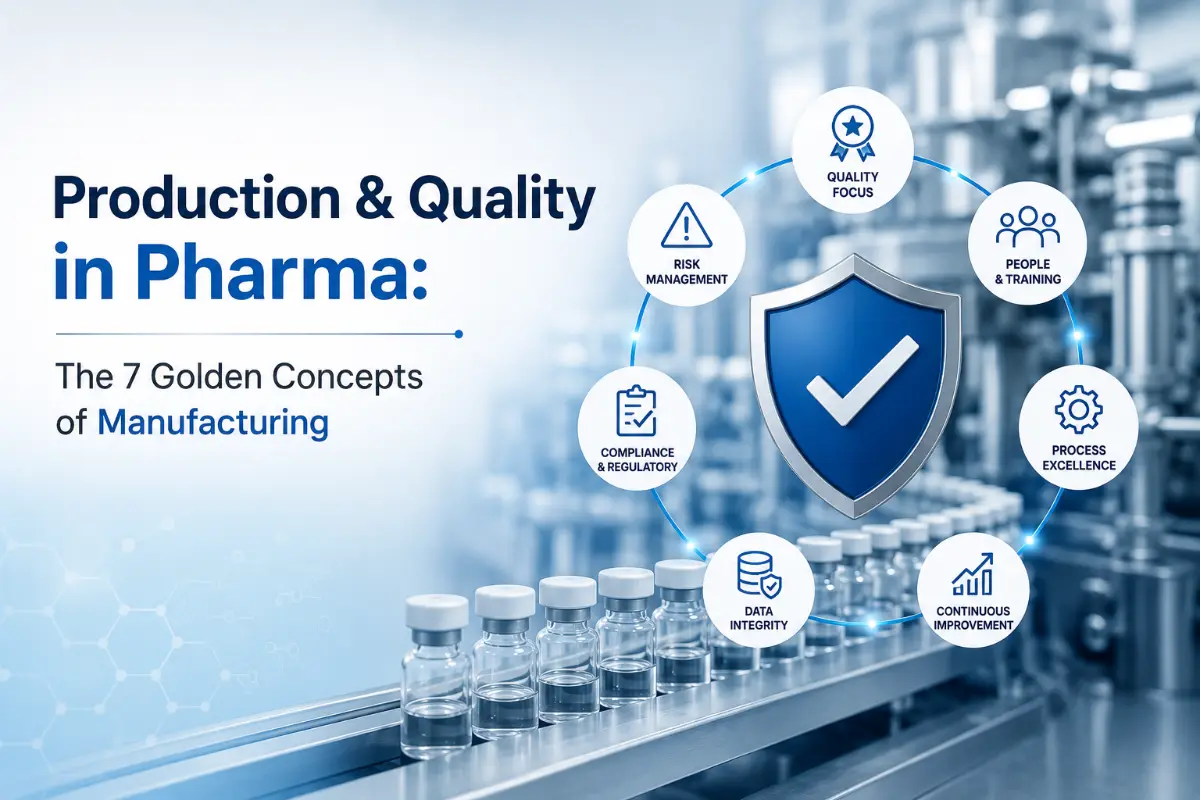
In pharmaceutical manufacturing, the intersection of Production and Quality Assurance is where science meets strict execution. Unlike conventional manufacturing, a minor oversight in a drug production line can have life-threatening consequences for patients. To prevent errors, cross-contamination, and product mix-ups, global regulators enforce strict guidelines. Let's break down the 7 fundamental concepts that govern daily production and quality operations.
Guide Sections
- 🧹 1. Line Clearance
- 🏷️ 2. Status Labeling
- ⚖️ 3. Material Reconciliation
- 🧪 4. Sampling
- ⏳ 5. Hold Time Studies
- 📈 6. Yield (Theoretical vs. Actual)
- 🔑 7. The Role of QA in Batch Release
🧹 1. Line Clearance: The Clean Slate
What is it? Line Clearance is a systematic, documented check performed before starting any manufacturing, filling, or packaging operation. The primary goal is to ensure that the work area, machinery, containers, and packaging lines are completely clear of previous products, materials, waste, and documentation.
Why it matters: If a packaging line was previously running 500mg Paracetamol tablets, and then switches to running 100mg Aspirin without line clearance, a stray Paracetamol tablet could end up in an Aspirin blister pack. Line clearance is the ultimate shield against cross-contamination and dangerous product mix-ups.
🏷️ 2. Status Labeling: Visual Control
What is it? Status Labeling is the practice of using clear, standardized, color-coded labels on equipment, containers, and production rooms to indicate their current processing or cleanliness state.
Common status labels include:
- CLEANED — Ready for processing the next batch.
- TO BE CLEANED — Awaiting cleanup post-production.
- UNDER PROCESSING — Batch is currently running.
- APPROVED — Raw materials or finished products that passed all lab tests.
- QUARANTINED — Awaiting test results or flagged due to deviation.
Why it matters: In a fast-paced manufacturing plant, relying on verbal communication or memory is a recipe for disaster. Visual labeling prevents uncleaned equipment from being used or unapproved raw materials from entering the production line.
⚖️ 3. Material Reconciliation: Keeping Count
What is it? Material Reconciliation is the comparison between the theoretical quantity of raw materials or packaging components issued for a process and the actual quantity produced, used, and wasted.
The equation is simple:
Quantity Issued = Quantity in Final Batch + Quantity Wasted + Samples + Unused Stocks
Why it matters: If you start with 10,000 blank labels and end with 9,800 labeled bottles and 100 damaged labels in the bin, 100 labels are unaccounted for. These missing labels could have been placed on the wrong product. Any significant discrepancy outside pre-established limits must be documented as a deviation and investigated.
🧪 4. Sampling: Representative Testing
What is it? Sampling is the process of collecting a small, representative portion of a batch (raw material, in-process blend, or finished product) according to a defined statistical plan (e.g., the square root of N plus one rule) to be analyzed by the Quality Control laboratory.
Why it matters: Since you cannot test every single tablet in a batch (testing is destructive), the sample collected must accurately represent the quality of the entire batch. Sampling must be done under controlled conditions to prevent external contamination.
⏳ 5. Hold Time Studies: Safe Storage Windows
What is it? Hold Time is the validated, maximum time period during which intermediate products (like granulated blends), bulk products (like un-packaged tablets), or cleaned equipment can be safely stored under specified environmental conditions (temperature and humidity) without losing quality or safety.
Why it matters: Materials can absorb moisture, degrade chemically, or support microbial growth over time. Hold time studies establish strict expiration dates for materials waiting for the next step in production.
📈 6. Yield: Theoretical vs. Actual
What is it? Yield is the measurement of efficiency in production. It is divided into two types:
- Theoretical Yield: The maximum quantity of product that could be produced, based on mathematical calculations from the formulation weights.
- Actual Yield: The real amount of usable product obtained at the end of the manufacturing process.
Why it matters: Comparing actual yield against theoretical yield helps monitor process efficiency. A sudden drop in yield indicates loss of product during transfer, machine malfunctions, or compounding errors, which requires investigation.
🔑 7. The Role of QA in Batch Release
What is it? The ultimate step in the manufacturing lifecycle is the Batch Release. Quality Assurance acts as the final gatekeeper. The QA Head or Qualified Person (QP) conducts a comprehensive review of all documentation before a batch can be released for sale.
The Batch Release review checklist includes:
- Review of the complete Batch Manufacturing Record (BMR) and Batch Packaging Record (BPR) to ensure all steps were executed properly.
- Evaluation of all deviations, investigations, and CAPA outcomes related to the batch.
- Review of Quality Control (QC) analytical results for raw materials, intermediates, and final products.
- Verification that storage conditions were maintained throughout the process.
Only when QA certifies that the batch was made in absolute compliance with GMP guidelines and marketing authorization files is the batch formally released for commercial distribution.
Written by Senior Operations & Quality Manager
Senior Career Advisor & Recruitment Specialist at JobPortalConnect. With years of experience in HR matching, they review resumes, optimize career pathways, and interview recruiting partners directly.