





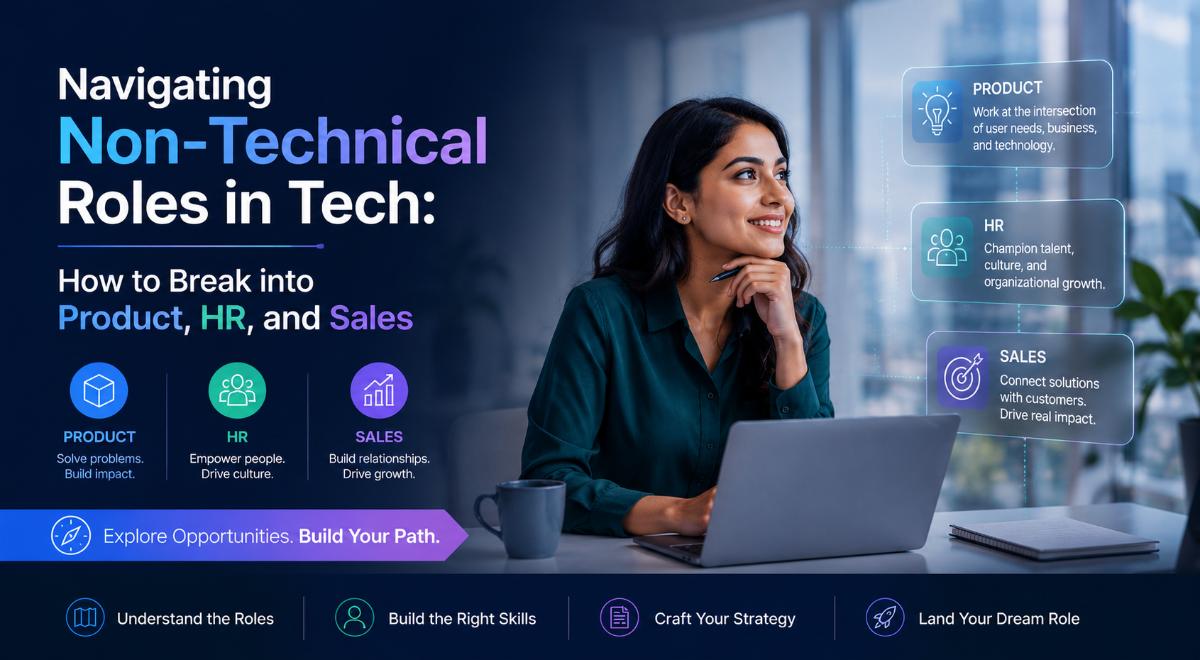
Navigating Non-Technical Roles in Tech: How to Break into Product, HR, and Sales
The Non-Coding Tech Revolution
When people think of working at tech companies, they immediately picture software developers, data scientists, and systems engineers. However, tech companies need more than just coders to succeed. They require professionals to manage products, coordinate timelines, sell software, write documentation, and manage human resources. In fact, over 40% of employees at major tech giants work in non-technical roles. These positions offer competitive salaries, equity options, and the chance to participate in cutting-edge tech innovations without writing a single line of code.
If you have a background in business, humanities, marketing, or communication, here is a breakdown of the top non-technical roles in tech and how to transition into them.
1. Product Owner / Product Manager (PM)
The Product Manager acts as the "CEO of the product." They sit between the developers, designers, and business executives to define what features the software should have and why.
- Key Skills: Market research, communication, user empathy, and roadmap design.
- How to Transition: Earn a certification like Certified Scrum Product Owner (CSPO) or Product School credentials, and build a portfolio analyzing existing products and proposing feature improvements.
2. Scrum Master / Agile Project Manager
A Scrum Master does not code; instead, they facilitate team meetings, resolve blockers for the developers, and ensure the team follows Agile methodologies to deliver software on time.
- Key Skills: Team leadership, conflict resolution, and master-level organization.
- How to Transition: Get the Professional Scrum Master (PSM I) or Certified ScrumMaster (CSM) certification. These are highly valued and relatively easy to study for.
3. Technical Writer
Tech companies build highly complex tools. Technical Writers translate this complexity into easy-to-understand manuals, API documentation, guides, and help articles for developers and end-users.
- Key Skills: Excellent writing, ability to learn technical tools, and attention to detail.
- How to Transition: Compile a portfolio of writing samples (like explaining how to set up an app or use an API) and post them on platforms like Medium or GitBook.
4. HR Business Partner (HRBP) / Tech Recruiter
Managing talent in tech is highly competitive. Tech Recruiters and HRBPs specialize in finding, interviewing, onboarding, and keeping top technical talent, aligning HR policies with company business goals.
- Key Skills: Networking, understanding basic tech terminology (knowing what React/Node are), and employee relations.
- How to Transition: Gain experience in standard recruitment agencies, build a network on LinkedIn, and study the tech stack structures used by major companies.
Written by JobPortal Editorial Team
Senior Career Advisor & Recruitment Specialist at JobPortalConnect. With years of experience in HR matching, they review resumes, optimize career pathways, and interview recruiting partners directly.